Well, it’s that time of year again. Time to look back on the year that was and plan for the year ahead of us. For many, this is an act that simply involves flipping to a new calendar month and maintaining the status quo. For others, this involves staring into the distance in deep thought, hoping an epiphany strikes them with newfound insights. There are a lot of paths that individuals and organizations can take before planning for a new year, but despite many popular social media posts, simply manifesting a word or crafting a vision board, rarely results in the long-term success being sought after. Reflection is necessary and is often the action ignored on the growth journey.
What is reflection? It is more than just remembering and longing for days gone by. Reflection is a focused task that requires intentional thought and clarity. Many of us have heard of Bloom’s Taxonomy. The learning framework popularized more than sixty years ago by Benjamin Bloom as he explored the keys to long-term retention within the cognitive domain. Bloom hypothesized that all learning could be categorized into one of the following levels of complexity: Knowledge, Comprehension, Application, Analysis, Synthesis, Evaluation, and Creation. But what happens when a creation requires revision? How does one learn the steps required to make positive, proactive progress? This is where reflection comes in. Reflection is, what I consider to be, the pinnacle of learning. It exists after someone has organized their thoughts and made a creation in their best effort and still can circle back and determine ways to improve.
For too many, their efforts to defend their actions are their biggest barriers to success.
Reflection, and the willingness to embrace the possibility of needed improvement, is a key to growth.
When I work with leaders, organizations, schools, and individuals in the goal-setting process, we always begin with an intentional process of reflection. We move beyond gut feelings, emotional reactions, or biased hunches. We look at what we know and work to uncover what we don’t yet fully understand. Although each session is unique, typically, a coaching session begins by asking and answering some of the following questions:
- What were the goals we developed last year?
- What action steps did we take towards accomplishing our goals?
- What successes did we see in our implementation?
- What got in the way of us seeing even greater success?
Notice the intent behind these questions is not to look forward, but to look back. Before we begin making a plan for the future we must first identify what we did in the past. Without first casting a glance at what led to our successes and struggles, any future plans we make are just hopes and dreams without any concrete guidance to move forward.
Our past can serve as an objective observer of our future decisions if we allow it to.
When we look at our past goals we should see measurable results. We should be able to answer, “Yes” or “No”, when asked, “Did we meet our goal?” The goal is the outcome, not the steps taken along the way. Each year as new resolutions are crafted and new goals are developed, too many people freely abandon failed goals and move on to something new without first exploring whether the past failure was the result of a bad goal or inadequate action steps. The action steps are often more important to progress than renewed or refreshed goal statements.
Imagine that your business, organization, or family had a desire to eliminate debt last year. During your end-of-the-year reflection you realize you did not meet your goal and maybe even increased your debt ratio.
Some people would use this as an opportunity to defend their decisions throughout the year and rationalize the decisions they made that resulted in this outcome. “I had to have a new car.” I had to go on vacation.” ” We needed to provide employee raises.” “We had to purchase new resources.” etc…
Some may use this as an opportunity to kick themselves and give up on the goal in the future. They may claim that the goal was unrealistic and an impossible dream, switching their focus in the future to something they see as more easily obtainable.
I would take a slightly different tact. I would ask why this goal was developed in the first place. What would being free from debt accomplish? Is this a goal that would allow for greater financial freedom and the ability to leverage more cash in the future? Was this a goal developed because you just heard others pursuing it? Was the goal developed because it aligned with a greater purpose?
Every meaningful goal must align with a greater purpose or it will quickly be abandoned at the first sign of resistance.
If we can identify the purpose for the goal, we must then ask if that purpose still exists within us. We then examine whether the goal we developed is THE WAY to accomplish that purpose or simply A WAY to move forward. This exploration allows for descriptive dialogue surrounding our desires to move forward. We know the power of finding “our why”. Organizational and personal development require this as well.
If our purpose remains the same, we then examine the goal created, and more importantly, the action steps executed in our quest for success.
Finding success in established goals is often a difficult process, which is why we struggled to find success in the past, but it is possible when aligned with purpose, planned with reflection, and defined through action.
This year, before you craft your resolutions, publicize your one words, draft your improvement plans, or scrap everything you already put into motion, take a moment to reflect. Don’t just sit on a beach staring at a sunset dreaming of days gone by. Dig deep. Ask the hard questions. And plan your way to growth.
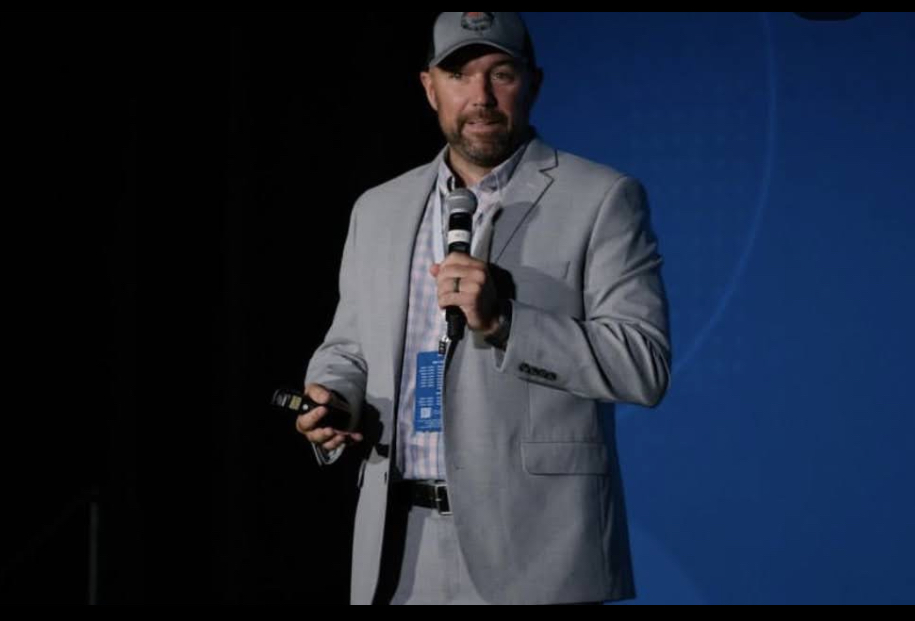
Dave is a coach and consultant supporting schools, organizations, and individuals across North America in their pursuit of aligned goals, objectives, and feedback.
Learn more at https://LastingLearning.net
 Lasting Learning: Serving leaders, educators, and students.